A search engine that pays you

Dora and my Daughters


Dora the Explorer was first aired by Nickelodeon TV as an animated series for the preschool kids. The Latina girl, or Hispanic girl as described by some of the websites that I explored, speaks English as well as Spanish. Each episode consists of Dora, and her monkey friend Boots, going on a journey with some purpose. On the way, they come across different things to note, adventures to see and riddles to solve. The best of all is that it is a kind of interactive. Dora asks the audience to say or repeat something or even answer a question. Pictures are provided to pick up the correct answer, and after waiting for sometime, an arrow (like that of a cursor) moves towards the correct answer and clicks on it.

The other characters in Dora are:
Benny the Bull
Isa the Iguana
Tico the Squirrel
Big Red Chicken
Baby Blue Bird
And the cute Villain, Swiper the Fox
The Fieasto Trio consist of the Snail, Grasshopper and the Frog, who play music for the Queen Bee. This trio keep appearing whenever Dora and Boots finish a milestone in their journey.

The Map and the Bagpack are Dora's friends. The Map tells the way and the Bagpack appears with a cute song,"...filled with things and nicnacs, too...", and whenever Dora needs anything, the Bagpack has it, be it a pail or an Icecream cake!!!

There are more characters like the Postman, the Pelican, Senior Toucan, Baby Petunia and so on who appear in some stories but not in all.

All this was wonderful on the Nickelodeon. But what with all the paid channels cut off, my younger daughter could not be introduced to this, and the elder one was in the verge of forgetting "her friend". But, the channel Chutti TV of the Sun Network made Dora so popular in Tamilnadu that it has become a craze like the Barbie doll. The dolls of Dora now appear for sale in the deparmental stores. I even found a soft toy of Dora.

To impress my kids and to make them realize the importance of not disturbing the Dolls festival of Navratri, I thought of using Dora and her friends. I searched many places for the other characters, but could not find even Dora's best friend Boots' doll. I then searched the net for ideas to make them. But finally, I got it inside my head. I bought stickers of Dora and all her friends, including Swiper the Fox. I bought white Mseal, the one that is used for crafts. I mixed the Mseal mixture, fixed the sticker and flattened the Mseal, preserving a reasonable thickness. I also shaped it up to fit the outline of the sticker. I arranged my doll houses with Dora and her friends and here is what I got. Watch out for Map and Bagpack in the balcony of the smaller house.


I even found Diego, Dora's cousin, who is fond of animals and goes on adventures to rescue them from dangers.

After Navratri Golu, what? Nishkala, my younger kid, started to ask for Dora's show whenever she was reminded of her. Whenever she or someone else has a problem, she would ask Dora to solve it. The other day, she was feeling sad about the absense of the usual star (which is actually planet venus) near the moon. She said the star got away from its mother and said that Dora would help it go to her mom.

This prompted me to search for full episodes of Dora on the net. My quest went on for about 4 hours on the net.

I found that the net is like the Room of Requirement of the Harry Potter series. You have to get the right words to find what you want and you will get exactly what you want, sometimes even in a better way. I tried all word combinations with it - "dora the explorer online", "dora the explorer downloads", "dora the explorer watch online", "dora the explorer online full episodes", "full episodes of dora the explorer", "download dora the explorer", "dora the explorer episodes" and so on.

I finally hit upon the website when I typed "watch dora the explorer". The name of the website is the same. It is www.watchdoratheexplorer.com. So simple, yet, it did not appear till I got the right words!!!

And so, here I am presenting to all those who might have even given up this quest. It has some of the episodes that have been uploaded by members. Sign up in this website, and you can even contribute to it by uploading any episodes that you have.

DORA THE EXPLORER


Back to My own Experiences
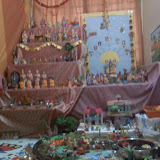
Kolu photos 2008

My Navaratri in the year 2008, September 30 to October 9.


Kolu 2008


Thoughts of a Mother


Little things of the universe,
Drops of water, grains of sand,
are so mighty that they support
Life in water, mountains and land.

Such are little girls of mine,
Cheery, bubbly, sweet and naughty.
I pray that they grow up this way,
and not as vain and proud and haughty.

I've always liked kids from my childhood,
and played with them to enjoy.
But its different in parenthood,
Responsibility and pride and joy.

Though I give them all they ask,
Yet, they are never short of demands.
To make them realize the value of things,
I resort to authority and commands.

The look on their faces when I scold them
really melts my heart.
Composing myself with difficulty,
I try again and explain from the start.

I try my best to go any lengths
to equip them for the world they face;
to understand the value of things,
and also compete in the race.

I pray that they grow up to be
a source of joy to the lives they touch.
And now when I look back I realize,
Oh Mom and Dad!! I owe you so much.

This is an entry to the Mother's day competition in Indus Ladies.


Blogging My Blog

This section of my blog will have some of the articles which I cannot label under any of the common topics.

Mosquitoe Facts

Mosquitoe Facts


  • Mosquitoes family Culicidae.
  • They have a pair of scaled wings, a pair of wings called halteres, a slender body, and long legs.
  • Mosquito fossils date back at least as far as 100 million years ago.
  • A mosquito only weighs 1/25,000 of an ounce.
  • Length varies but is rarely greater than 16 mm (0.6 inch), and weigh up to 2.5 mg (0.04 grain).
  • The average life span of a female mosquito is 3 to 100 days. The male lives 10 to 20 days.
  • One female mosquito may lay 100 to 300 eggs at a time and may average 1,000 to 3,000 offspring during her life span.
  • Mosquito eggs can survive for more than 5 years.
  • All types of mosquitoes need water to complete their life cycle.
  • Male mosquitoes survive by sucking on nectar and other plant juices.
  • Only female mosquitoes bite—they need the protein for their eggs.
  • When they bite, they transmit viruses and parasites, making them a prime vector for West Nile virus, encephalitis, Dengue fever, malaria and a host of other diseases.
  • The animal responsible for the most human deaths world-wide is the mosquito
  • Before the female mosquito actually draws your blood, she might probe your skin as many as 20 times, looking for a small blood vessel to nick.
  • Mosquitoes have poor eyesight but have extremely sensitive thermal receptors on the tip of their antennae to locate blood near the surface of the skin.
  • A mosquito can detect a moving target at 18 ft away
  • Mosquitoes rarely travel farther than 300 feet from their birthplace.
  • A mosquito can fly for 1 to 4 hours continuously at up to 1–2 km/h travelling up to 10 km in a night.
  • Mosquitoes are found all over the world, even in cold places like the Arctic.
  • Mosquitoes prefer dark places like trees, grass and shrubs.
  • Like humans, mosquitoes have food preferences—not all mosquito species bite humans, some prefer birds, horses, frogs or turtles.
  • Mosquitoes prefer children to adults, and blondes to brunettes.
  • Mosquitoes locate blood-hosts by scent, sight and heat. From 100 feet away (30 meters) mosquitoes can smell your scent, especially the carbon dioxide (CO2) you exhale.
  • Mosquitoes don’t whine just to be annoying. The high-pitched sound they make, created by their rapid wing beats (of up to 500 beats per second), helps the males hone in on a mate.
  • A mosquito doesn’t actually bite, it stabs - piercing your skin with its long proboscis.
  • The welt that appears after a mosquito bites is an allergic reaction to the saliva that is injected into your skin to prevent your blood from clotting.
  • A mosquito can drink one-and-a-half times its own weight.
  • Although mosquitoes can carry and spread many dangerous diseases, they cannot transmit AIDS.

What mosquitoes are attracted to…

  • dark colors, dark coloured clothing..
  • lactic acid your body gives off, which comes from eating bananas and high-potassium foods.
  • floral or fruity scents and fragrances.
  • sweating.
  • standing water.
  • tall grass and weeds.
  • bright lights, incandescent lights, fluorescent lights.
  • carbon dioxide (CO2) you give off when you breathe.

What mosquitoes don’t like…

  1. DEET Repellants. DEET is a chemical that blocks insects ability to detect the carbon dioxide we exhale. But quite unsafe for children.
  2. Eat garlic. Mosquitoes (and vampires) dislike the natural skin secretion caused by garlic. If you don’t mind like smelling like a Pizza Hut bread stick, a daily dose of 1,500 mg of fresh garlic or a 15 mg capsule will do the trick.
  3. Take a daily B-Complex or a 100 mg B1 (Thiamin) vitamin. It omits an odor through your skin pores, not detectable to humans, which grosses-out mosquitoes.
  4. Burn herbs. Throw some sage or rosemary on the coals in your grill whenever you’re grilling outside.
  5. Mosquito repelling plants. Grow or buy the kinds of plants that mosquitoes don’t like, such as: Citronella Grass, Catnip, Rosemary, Marigolds, Horsemint, Basil, Ageratum, and Agastache Cana.
  6. Drink tonic water.
  7. Burn Citronella candles. It irritates their feet.
  8. Vanilla Extract.
  9. Listerine Mouthwash. 50/50 with water or household vinegar. Spray it on yourself, doorways, tables, chairs, etc…
  10. Essential oils. Spray, spritz or rub yourself with an essential oil (diluted in water or almond or olive oil) known for repelling insects, like: Citronella, Lemongrass, Lavender, Peppermint, Eucalyptus, Thyme, Cajeput, Geranium, Red Cedarwood, Mugwort, Clove Flower Buds, Spearmint, Turmeric Root, Black Walnut, Wormwood and Rosemary.

Controlling Mosquitoes

There are two kinds of mosquito control: large, organized programs to reduce mosquito populations over a wide area, and actions individuals can take to control or exclude mosquitoes with respect to themselves and their own property.

  • source reduction - the removal of mosquito breeding habitats.
  • habitat modification - manipulating habitats to reduce breeding or access.
  • biocontrol - introducing natural predators of mosquitoes.
  • larvicide - using pesticides to reduce larval populations.
  • adulticide - using pesticides to reduce adult populations.

So, next time you hear the buzzzzzzzzzzz….

Back to Blogging my Blog

My own experiences

Videos and photos capture moments only. But feelings can be captured only with words, and sometimes words too, are useless. But words can keep the description alive so that one can tour the nostalgic memories again and again and yet again....

Me and my weight
Burger at Marrybrown
Dora and My daughters

Me and my weight

Fitness seems to be a part of every conversation nowadays. Each of us find ourselves talking about what kind of exercise we are doing apart from the medical conditions like problems with sugar or thyroid control. In any case, some form of exercise is a must. Even for those who are fit enough, the medical professionals prescribe walking or so to prevent problems in future.

And so, I too decided to start with my workout to manage my weight. It reached a peak of 77 kilograms after my second daughter, Nishkala. So, what with a baby and a cessarian section done, I could not workout in a gym. But then, I patiently kept waiting for time to tell. Then when my kid reached her first birthday, I went around to hunt for a crèche and a gym simultaneously. Both were necessary. Once I found it, I had to shift my residence to a new place and all my dreams of fitting into that favourite dress of mine had shattered.

Of course, I did not give up. I started a new search in this new area. I found three weight management centers within half a kilometer radius and four play schools too!! But my kid was “too young” for a play school. They would take only kids above 2 years. So again, my balloon inflated (alas, not my weight). All these set backs did not move my will power to bend. In one of my hunting trips I finally landed into a gym with a very understanding instructor. She told me that she would take care of my baby while I do the exercise. That was the key. I grabbed the offer and signed up immediately.

The first day I took Nishkala, the instructor explained me about warming up and using the machines like treadmill. She took charge of my baby too. The kid fell asleep. So, the next day, I got a small swing for her. I would take the swing everyday to the gym, put it up in one of the bars and the instructor would put her to sleep while I did my workout. This routine did a lot of good to me. I reduced about 8 kgs in 4 months. My doctor was very pleased to see about half of me, during the next visit. I could wear my old clothes and new jeans too. I was proud to buy the 3rd largest size, when I went to buy the tops for my jeans. All this due to the helpful instructor in the gym.

Sometimes, we do not know who would help us in life. It may not necessarily be friends and relatives. A person who offers to help may be a stranger at that time. But they become friends for life.

As months flew Nishkala grew up, and I was able to put her in a good school nearby. But even now I continue to go to the same gym and I am able to keep my weight and health in a good condition.

In the meanwhile, I discovered a lot of workout videos on the net. Now I am able to do the workout at home. Now the reason to go to the gym is different. Apart from following a regular fitness routine, I am able to have a lot more contacts and friends there.

So next time you think of weight reduction, join a gym. There is more to your looking good. You feel good too!!

Back to My own experiences


Burger at Marrybrown

My daughter was invited to a birthday party of her friend to one of the Marrybrown restaurants. When I went to drop her there, I too was asked to stay back. So, I stayed and had a good look around.

Prior to this, I often passed the place wondering how it will be. After tasting the food of Pizza Hut and McDonalds, I did not fancy eating burger in this place. This was different thing to try on.

So, I soon found that it had a play area. It would be free for all kids if there was no party going on. Now, that would be a treat for my kids. What’s more, I could also enjoy hands free burgers now and then.

I also found that the burgers were quiet tasty and good. I enjoyed the party. I thanked the hostess not only for inviting me for the party but also for showing me a new place to freak out, that too, with my kids.

So when my daughter asked for another trip to Marrybrown, I did not think twice. But I made a promise to her that if she spends 2 hours studying on Wednesday, I would take her there on Thursday. And I did. I took both my daughters to Marrybrown restaurant on Thursday. They had a very good time at the tiny play area there and I enjoyed a solitary treat with a burger and iced lemon tea(though the latter was not as good).

Back to My own experiences

Water while you Workout

As you can see, exercise saps almost one quart of water from our bodies. That’s why it’s very important to drink even more water while exercising. However, drinking water before and after exercise is just as important.

Start paying attention to your fluid intake 2-3 hours before you are going to exercise. Drink 2-3 cups of water during that time, and then drink another cup immediately before you start exercising.

Without this extra water, your muscles will become dehydrated. Muscle movement depends on how hydrated you are, so if they are dry, they will not work as well. As a result, your workout will not be as productive as you would like.

Once you start exercising, keep drinking water frequently. A good rule of thumb is to drink one cup every 15-20 minutes. Keep a water bottle with you. Take breaks to head to the water cooler. Do what it takes you keep yourself hydrated.

Even when you are done exercising, you need to keep replenishing your fluid levels. It’s recommended you drink another 2-3 cups within two hours after you have finished. Then drink water regularly afterwards.

The more you drink before, during, and after exercise, the more productive your workout will be. Do your body a favor and replenish that quart of fluids your body is losing while you work out. Your muscles will thank you later.

Back to Water for Health

OTHER BEVERAGE COMPARED TO WATER


Staying hydrated is not restricted to drinking water; milk, juice and other liquids – even some fruits and vegetables – are good sources of water. But avoid caffeinated beverages (coffee, soda), as they actually cause you to lose fluids and become dehydrated.

Both the beverage-drinking patterns and overall health of U.S. adults have changed considerably over the past several decades. In the 1970s, Americans got 6-8% of their daily calories from drinks, but today, 21% of their daily calories from beverages. Not counting what’s in that glass, cup, can or mug may be a major cause of the alarming increase in obesity.

In March 2006, the American Journal of Clinical Nutrition published guidelines for beverage consumption, developed by the Beverage Guidance Panel. These experts reviewed years of research on beverages and health to make recommendations for adults. The panel stressed that a healthy diet should NOT rely on fluids to provide calorie or nutrient needs, and that water is necessary for metabolism and normal physiological function. In fact, water is the only fluid that the body truly needs.

Use the following guidelines to evaluate your own beverage intake, based on 6 categories (levels).

Healthy Beverage Guidelines for Adults

  • Consume 12 cups (96 ounces) of fluids per day.
  • For an adult on the standard 2,200-calorie diet, no more than 200-300 calories should come from fluids.
  • Adults consuming fewer than 2,200 calories should limit calorie-containing beverages even more—to less than 200 calories daily.

Level 1: Water
When eating a healthy diet, water can meet all of your fluid needs. This is the ideal choice.

  • Recommended Daily Consumption: At least 2-6 servings (20-50 ounces)
    * NOTE: Consume additional water if you limit other beverages.
  • Calories per Serving: 0

Level 2: Unsweetened Coffee and Unsweetened Teas
Coffee has some limited health benefits, while tea provides a variety of flavonoids and antioxidants. Both contain caffeine, which should be limited to less than 400 milligrams daily (or less than 300 mg for pregnant and breastfeeding women).

  • Recommended Daily Tea Consumption: less than 5 servings (0-40 ounces)
  • Recommended Daily Coffee Consumption: less than 4 servings (0-32 ounces)
  • Calories Provided per Serving: 0

Level 3: Low-Fat (1%) or Skim (fat-free) Milk and Unsweetened/Fortified Soymilk
Milk is an important source of calcium, magnesium and potassium. Through fortification, it is also a good source of Vitamin D. Fortified soymilk is a good alternative with many of the same benefits.

  • Recommended Daily Consumption: less than 2 servings (0-16 ounces)
  • Calories Provided per Serving: 85-100

Level 4: Non-Caloric, Artificially-Sweetened Beverages
This category includes diet soda, diet drinks, and artificially-sweetened drinks, teas and coffees. Although the Food & Drug Administration (FDA) has approved non-caloric sweeteners as safe, some studies suggest that diet drinks condition adults to have a higher preference for sweets. These teas and coffees also contain caffeine. (See level 2 above for guidelines.)

  • Recommended Daily Consumption: less than 4 servings (0-32 ounces)
  • Calories Provided per Serving: 0

Level 5: Caloric Beverages with Some Nutritional Benefits
This category includes fruit and vegetable juices, sports drinks, whole and reduced-fat (2%) milk, sweetened or flavored milk, and alcohol. Many vegetable juices are high in sodium, so select low-sodium varieties. Fruit smoothies are considered high-calorie versions of fruit drinks and should be enjoyed sparingly.

  • 100% Fruit & Vegetable Juices and Smoothies provide nutrients in their natural state, but lack fiber and some of the nutrients that are found in whole fruits and vegetables, which should be eaten for satiety and caloric balance.
    • Recommended Daily Fruit Juice Consumption: less than 1 serving (0-8 ounces)
    • Calories Provided per Serving: 100-150
    • Recommended Daily Vegetable Juice Consumption: less than 1 serving daily (0-8 ounces)
    • Calories Provided per Serving: 50-100
  • Sports Drinks were designed for endurance athletes who need to replace electrolytes, sodium, chloride, and potassium levels that are diminished during endurance events.
    • Recommended General Consumption: Drink very sparingly.
    • Recommended Consumption for Endurance Athletic Events (strenuous activity that lasts over 90 minutes): less than 2 servings (0-16 ounces)
    • Calories Provided per Serving: 0-40
  • Whole Milk and 2% Milk contain a significant amount of calories, fat, and saturated fat, so they are not recommended.
    • Recommended Daily Consumption: 0 servings
    • Calories Provided per Serving: 120-160

  • Sweetened or Flavored Low-Fat Milk products contain the same nutrients as low-fat dairy products (Level 3), but more calories due to the added sweeteners.

    • Recommended Consumption: Drink very sparingly.
    • Calories Provided per Serving: 150-160


  • Alcoholic Beverages, when consumed in moderation, have some health benefits for adults, including reduced risk of cardiovascular disease, Type 2 diabetes, and gallstones. Moderate intake of alcoholic beverages has been linked to an increased risk of breast cancer, while excessive alcohol consumption causes serious health and social problems. Pregnant women should NOT drink alcoholic beverages due to the increased risk of birth defects.
    • Recommended Daily Consumption for Adult Women who Choose to Drink Alcohol: 0-1 serving
    • Recommended Daily Consumption for Adult Men who Choose to Drink Alcohol: 0-2 servings
    • One serving of alcohol is: 12 ounces of beer, 5 ounces of wine, or 1.5 ounces of distilled spirits
    • Calories Provided per Serving: 100-200

Level 6: Caloric, Sweetened Beverages without Nutritional Benefits
This category includes soft drinks, fruit drinks, fruit punch, fruit cocktail, fruit aid, and caloric/sweetened teas and coffees. These foods are higher in calories and have little (if any) nutritional benefit. Caloric sweeteners have been linked to poor dental health, excess caloric intake, weight gain, and Type 2 diabetes. Some studies suggest that sweet, flavored drinks can condition adults to have a higher preference for the taste of sweetness. These drinks should be limited as much as possible.

  • Recommended Daily Consumption: 0-1 serving (8 ounces)
  • Calories Provided per Serving: 75-130
    *NOTE: The caloric contents of tea and coffee vary greatly according to the ingredients added.

Back to Water for Health

Drinking more water a day

The recommended daily amount of water is eight cups a day, but don’t feel bad if you have neglected your water intake. Even if you constantly drink coffee or soda, you can make some simple changes to increase the water in your diet. Here are just a few ways to get more water every day:

  • Find the water bottles with pop tops. They’re easier to carry around and use than twist off caps.
  • Keep a water bottle in the car.
  • Take a water break instead of a smoke break at work.
  • Set a rule with your water glass: once it’s empty, it gets filled back up right away.
  • Drink orange juice or eat fruit in the morning.
  • Get two water bottles, one for work and one for home. Fill up one every day when you leave to go home, and fill up the other before you go to bed each night.
  • Order water at restaurants instead of soda. Even if you have something else to drink, have water too.
  • Weekends are the toughest, so be aware of your water and fluid intake throughout Saturday and Sunday. Keep more than one water bottle in the fridge so you always have a cold one.
  • Try this. Put a water glass on your windowsill with 8 pennies on one side. Each time you filled up your glass and drank it, move a penny to the other side, until all the pennies were moved. Great reminder system!

Drinking eight glasses:

Eight glasses of water every day? No matter how you pour them, that’s a lot of liquid. We're talking cups and cups…and cups. Even knowing about the many benefits of meeting your daily quota—increased fat burning, healthier skin, more energy, better digestion, fewer cravings—doesn't make drinking it (or dealing with increased bathroom visits) any less of a struggle for many of us.

If you feel like you're barely treading water when it comes to drinking your water, don’t despair. There are lots of little secrets—time-honored tricks that those elusive "water drinkers" use—that even you can try to transform yourself into an H2O-guzzling machine.

For best results, try the two that spark your interest immediately, then add one each week until you’re getting all the water you need. And remember, there is no magic number. The recommended eight cups a day is not a one-size-fits-all. You’ll need more if you’re sweating through workouts; less if you eat a lot of water-rich fruits and vegetables.

1. Try comfort water
This is a great tactic for coffee and tea drinkers. While you’re waiting for the coffee to brew, nuke a glass of water (or herbal tea), squeeze in a bit of lemon and sip while you wait. Try another cup of warm water after you’ve had a mug or two of coffee. Hot water is also a great treat on a cold afternoon or evening. Invest in a new kind of herbal tea every time you grocery shop until you’ve found a couple that are just right.

2. Tag your water bottle
Splurge on the perfect reusable water bottle. Whether it's your favorite color or a unique design, the more you bond with your bottle, the less likely you'll be to lose it. Slap an inspirational sticker or image onto it, or even write on it with a permanent marker. Now you're ready to drink from it throughout the day—don't forget to refill it as soon as it's empty.

3. Sip up
Gulping all that water can seem daunting. So get a package of straws to slowly sip it instead.

4. Become a connoisseur
Think of water drinking like wine tasting. Taste the various brands and types of bottled waters available (sparkling, spring, mineral, vitamin-enhanced, reverse osmosis, filtered, fruit-flavored, etc). Be sure to read the labels as some "waters" have significantly added calories. Many bottles of water contain two to three cups of water.

5. Drink water and drive
Keep your water bottle next to you every time you hop into the car, or buy a package of bottled water to keep in the car. Whenever you're driving about, your water will be within easy reach from your car's cup holder. Think about other places you can stash some water bottles (under your desk, next to the couch, in your purse, and more).

6. Drink your vitamins
Create your own vitamin drink. Consider combining your water with your vitamin supplements, if you take any. There are several powdered vitamin supplements that are designed to be mixed with water. Some contain little to no calories too. If you prefer to take vitamins in tablet form, then promise yourself to drink at least one whole cup of water every time you take them.

7. Fill your dinner glass
Set a glass of water at each place setting at the dinner table just like restaurants do. Don't fret about drinking it all—just place it there. By sipping water between every few bites, you'll slow you down and enjoy your meal more, while also meeting your water needs.

8. Filter out
Sometimes tap water just isn't very good. If your well or city water leaves a bad taste in your mouth, change it. Get a faucet or pitcher filter to keep out the bad and leave in the good.

9. Pace yourself
Holding (and drinking from) a cup of water will help you pace yourself at social events, parties and dinners that offer tempting food and drink. Try drinking a cup of water between bites of the calorie abomination you're faced with. It is hard to eat an entire piece of cake if you have to drink a glass of water between every single bite! To keep the wine, beer, or liquor from ruining your calorie count, drink a cup of water for every glass of alcohol you consume. (I’m a wine drinker, so I fill up my wine glass with water every time I empty it of wine.) Not only does this help to limit your consumption, but it helps counteract alcohol’s dehydrating effects. And when you have a glass in hand—no matter what's in it—you won't be bombarded with more drink offers in the meantime.

10. Find watering holes
When out and about, make it a point to stop by drinking water whenever you are within reach. Drink your water when out to lunch while reading the menu, and by all means if someone offers you a cup of herbal tea, say yes.

11. Combine habits
Get in the habit of drinking a cup of water when you do other things in your daily routine. Working out? Keep your bottle beside you. Heading for bed? Set a glass on the nightstand. Watching television? Develop water habits that go with your routines.

12. Reward your hard work
Make a habit of having special water after each workout, for example. This can be water you gussy up yourself with a slice of lemon or lime, a fruit-flavored water, or (what I enjoy) a tall sparking mineral water.

Just a couple of these tricks can push you across the eight-cup finish line fairly painlessly. So raise a glass and tell your metabolism who’s the boss. Sometimes, simply conquering your water goal is enough to set you on the right path in even more areas. Cheers!

Eight to twelve cups of water daily is the most accepted plan by the medical professionals and fitness experts. Whether you are having a hard time drinking that much water, or just want to drink a variety of beverages (coffee, tea, diet soda, juice), many dieters challenge and question the "8-12" rule.

Back to Water for Health

Water and weight management.

Weight management is a common social topic nowadays. Common excuses for not exercising is “not having time”. Drinking the recommended amount of water is a way which cannot be avoided. It is simple. Here are a few ways in which water helps in weight management.
  • Most people today drink way too many of their calories from other beverages like soda, juice, flavored coffees and teas, sports drinks, fruit drinks, artificially-sweetened drinks, etc. Drinking 8 cups of plain water a day—in place of, not in addition to—these caloric beverages can help with weight management. Plus, most of these beverages don't offer any health benefits, while water does.
  • Starting a healthy lifestyle can be overwhelming. Even if you can't exercise five times a week, for example, you can probably still drink water each day. By focusing on simpler goals like drinking water, you can begin to build momentum to reach other goals.
  • Water can also help you feel fuller, and thus can keep away from the tendency to nibble things.
  • Wejght loss programmes generally are to be accompanied by a high-fiber diet. Drinking additional water can help promote regularity and prevent the cramping and discomfort that often comes when you begin eating more fiber.
  • While you can get a lot of water from foods like water-rich fruits, vegetables, soups and more, following a reduced-calorie diet (for weight loss) means you're eating fewer foods in general. Eating less food means you're getting less water from food, so drinking plain water can help you meet your needs when food alone can't.
  • Weight loss programmes recommend at least 3 cardio sessions per week. When you lose water through increased sweating, you need to replace it.
  • Weight loss programmes recommend 1-3 strength training sessions each week to build lean muscle. Muscle is made up of mostly water, so the more you train, the greater your body's water needs will be.
  • The more hydrated you are, the quicker your metabolism works. When you are dehydrated – even before you start becoming thirsty – your liver has to help the kidneys function and can’t metabolize fat as quickly. Your metabolism slows down, causing some unwanted fat to remain.
  • If your body is used to not getting water, it actually stores more in ankles, hips and thighs. In other words, it doesn’t trust you to keep bringing water, so it keeps what it can get, like a thirsty cactus. Once it realizes the water will keep coming, your body will get rid of the stores and you’ll lose weight!

Somehow, though, water is one of the most neglected parts of our diet. Some of us possibly go an entire day at times without one glass! Every part of your body is dependent on and comprised of water, and the most important parts need even more. Your brain is made up of 75% water, your blood 82% and your lungs nearly 90%.

Back to Water for Health

Temples of Attraction

Among the various other things, the presence of God has always attracted attention and debate. One thing agreed to all is that there is a supreme power controlling the universe. Some believe it to be God and others call it Nature. The believers of God wanted to give him a form, most preferably, a human form. Then follows all the other attributes of the human form - Food, Clothes and Shelter. And there came into being, just like the homes of humans, the abodes of the Lord.
Each abode of the Lord is different and unique in its own kind depending on the local residents and rulers. Each has its own attraction.
I am not a very religious person, in the sense I do not strictly adhere to the rituals and rites. But I certainly do believe the presence of The Omniscience. The only ritual I follow is The Ekadasi Vratam, dealt in a separate section. In this section, I have put in information of some of the lesser known temples.

Udipi Sri Krishna
Sri Uttara Guruvayurappan temple
Bhakta Anjaneya of Temple Town

TREATMENT AND COSTS

In the past three decades, impressive advances have been made in the treatment of children’s heart disease with continuously improving results. Though medical treatment can control the symptoms of heart disease in children, surgery offers definite cure in most cases, especially congenital heart disease. Most of the treated children can lead an active and productive life with a near-normal life expectancy.


However, surgical treatment is expensive, costing Rs. 110,000 to 200,000 per case depending on the complexity. As nearly 40% of population of India lies below poverty line it is obvious a vast majority of affected children cannot afford such an expensive treatment.

Back to Hearty Helping Hand

TYPES OF HEART DISEASES

There are basically two groups of heart diseases in children – one is congenital heart disease, in which the child is born with a heart defect and the other being acquired, predominantly rheumatic heart disease.

Heart disease in children has a high mortality rate. Without treatment 90% of children with congenital heart disease die in the first year of life and a further 9% die before adolescence. Thus less than 1% of children with untreated congenital heart disease survive into adulthood. Even these children have a very low life expectancy of 30 to 40 years.

Children with heart disease can be severely incapacitated. The main complaints are breathlessness, repeated chest infections, cyanosis(blueness), weight loss and growth retardation. The affected children usually require regular medical check-ups. Severe cases where heart failure ensues may require frequent hospitalisation for control of symptoms. Thus heart disease can interfere with the growth and development of the child, including education and extra-curricular activities. The disability caused by childhood heart disease is all the more poignant because most of these children have normal intelligence, not to mention the fact that less than 1% of them survive into adulthood.

Back to Hearty Helping Hand

CONTRIBUTION OF GOVERNMENT OF TAMILNADU

India spends about 4.8% of GDP on health of which only about 25% is public expenditure. Medical and surgical treatment for children with heart disease is provided by government hospitals where treatment is free. But, in spite of their best efforts, many of these government hospitals are severely restricted by the dual burden of relatively inadequate resources and excessive volume of patients. A conservative estimate is that there are about 1000 children waiting for heart surgery. Considering the fact that the hospital performs about 300 operations a year, it will take at least 3 years for the current waiting-list to be cleared, not to mention the fact that new cases are added onto the list everyday!

There is usually a long waiting-list of children needing heart surgery. This leads to a situation wherein the optimum timing of surgery has passed and many children become inoperable; they eventually face a tragic death in front of the very eyes of their helpless parents.

The Institute of Child Health, Chennai has a department of children’s heart surgery offering free operations for children with congenital and acquired heart diseases. It caters to the needs of such children not only in Tamil Nadu but also neighbouring states.

Back to Hearty Helping Hand

RAISING FUNDS

With the KJ Hospital offering to help the effort in 2003, Dr. Sreemathi decided to raise money through a combination of corporate help and government funds. "There are several government funds giving between Rs 25,000 and 30,000, and one can raise Rs 90,000 for a deserving case, but the problem is lack of coordination and the money never comes in time; one comes without the other and the time limit is violated. By the time you get money from the PM's fund, you might have already returned money from the CM's fund."

Dr. Sreemathi is grappling with the nitty-gritty of raising funds for this cause. At first she wrote to wealthy individuals as also corporates, but got no response. Some of the international charities, such as Ford Foundation did respond and by trial and error she "…realised that there is a particular method of approaching people or organisations for such fundraising." Initially she focused on cardiac surgery, but soon realised that donors preferred complete healthcare projects including prevention and rehabilitation. "So with this new armament I'm trying to get back to all of them!"

She even attended a seminar on donation collection! "They advised us to first understand the donor completely and the reason he may have for giving money. We were told: “Don't depend entirely on the donor’s altruism or philanthropy completely. He might expect something in return”. While some donors don't want their names mentioned, others want publicity and we have to be able to tell the latter how to get it”. The dealings are transparent. "We send a letter to every donor, along with a photograph and contact of the child we have operated upon so they may get in touch with them. The donors are welcome with their suggestions," said Dr. Sreemathi.

The cardiac surgeon says that many celebrities such as Oprah Winfrey give money for charity, but the "…difficulty is getting past secretaries to reach them! If we can reach them I can convince them about our cause as we have two strengths — the genuineness of the team of doctors and the genuineness of the patients we operate upon”. This genuineness, Dr. Sreemathi adds, is being monitored through professional audit.

Dr. Saravanan adds that they had also approached banks with funds for the social sector. One of the General Managers of the State Bank of India responded; "we gave him a list for equipment worth Rs 53 lakh, and he said, `don't cut it, we'll try our best to give all of it'."

Also, there are the usual tax benefits to the donors. Donations are exempt from tax of upto 125% under Section 35 (i) and (ii) of the Income Tax Act.

Only those children from the lower socioeconomic group are eligible for this scheme and the family is required to produce evidence of income. We also encourage the family to contribute to the scheme whatever amount they can so that another disadvantaged child can benefit just like theirs, but this is not a precondition to treatment. One such parent, awe inspired by the surgery performed to save the life of his son, donated Rs. 3000/-, which was actually 3 times his monthly salary.

Back to Hearty Helping Hand

Success stories

Name: Mr. Vinodh Kumar
Age: 9 Years
Status: Operated 1 1/2 yrs earlier

Vinod Kumar suffered from Frequent respiratory infection. A hole in the heart between the upper chambers Atrial Septal Defect (ASD) was discovered during one episode of hospitalization. Being the only sibling put their parents in great trauma. They were on the lookout for donors for more than 3 years. His father is a painter by profession with a monthly income of about Rs.500. This was just not sufficient to run the house which comprised of 4 members. About six years ago their house was burned down in a fire accident and their agony was multiplied when they heard that their only son was suffering from heart problems. However god was gracious to them. The government granted them a house for free and their son was operated by us. He is now fine after the surgery and aspires to become a pilot. After surgery Mr. Vinodh Kumar donated Rs.3000/- for the corpus fund which was used along with other donations for surgery on another boy Surya with a defect called Patent Ductus Arteriosus.


Name: Ms.Gayatri
Age: 12 Years
Status: Operated

This little one was one of the victims of the Tsunami. Her family lost all their belongings including their house and their fishing boat (only means of livelihood) because of this natural disaster. She was a suffering from frequent cough and fever. Even normal activities like playing or cycling left the girl breathless. On diagnosis it was found that she had a hole in her heart between the lower chambers – Ventricular Septal Defect (VSD). After the surgery she is now well and is continuing her studies. Thanks to the faceless many all over the world.


Name: Ms.Sripriya Vidyakar
Age: 11 Years
Status: Operated

The tiny tot was diagnosed for Atrial Septal Defect (ASD)– Hole between the upper chambers of the heart in a medical camp attended by one of our doctors. She is an orphan. Abandoned by her parents she was admitted into ‘ Udhavum Karangal ’ a home for the homeless when she was 1 ½ years old. She is now pursuing her schooling and is presently in her 7th Standard. After the operation she is fine. She is very intelligent and aspires to become a doctor. Thanks to the founder of Udavum Karangal Mr.Vidyakar.

Back to Hearty Helping Hand


SAMRAKSHAK OF LITTLE HEARTS

One of the recent happy occasions for this team was when Mr. Amitabh Bachchan dropped in to visit the place that contributed to his health matters in his difficult times. Dr. Sreemathi grabbed the opportunity to explain to him about the “Needy Little Hearts”. She asked him if he would accept the title Samrakshak or Patron. He chose the former.

And out of his pocket he took his pen and wrote a cheque of 11 lakhs!!

His short note in the visitor's book said -"May the Almighty give you the strength and courage to continue this noble service to humanity".

Here are a few captured moments of happiness.


Back to Hearty Helping Hand

PREVALENCE OF HEART DISEASE

On the prevalence of cardiac disease in children, Dr. Sreemathi says that authentic data is not available in India but making projections from western data, six children in 1,000 have congenital heart disease, and five per 1,000 have rheumatic heart disease (RHD). Even though all of them may not require surgery, she estimates that around 1.1 lakh children are born each year with congenital heart disease in lower-middle class homes. Add to this the RHD, and the number is huge. "Forget statistics, I have seen blue babies just dying like flies in the general paediatric ward at the ICH; if we had the means we could have saved them."

She says it is generally thought that cardiac disease is not common, or its treatment is too expensive and only for the wealthy. "But we cannot tell a poor mother that if her child is lucky enough to get diarrhoea he'll survive, but if he gets heart disease, tough luck."

After a recent camp where 460 poor children — some from far-flung places like Kanyakumari and Vellore — from Corporation schools were screened, 38 were diagnosed with heart problems and successful surgery has already been done on four. "After reading about the camp, some children have come forward to help us; one of them got donations of Rs 1,000 each from two different donors; another sold newspapers from home and gave us the money," she says.

She wants to do more camps, but has found from trips to schools and orphanages that "the parents get flabbergasted when you say your child might have a heart problem. Unless you can give them a proper diagnosis straightaway, it's terrible and cruel to tell them that a problem might be there. So we want to get an echo machine, do the test on the spot and tell the parents. For example, it could be a murmur in the heart, which is innocent. We can tell the parents this because later if another doctor sees this and thinks it is a serious problem, they should know the child will grow out of it."

If it's an organic problem, more tests could be done and if necessary the child could be admitted. With plans to do 200 operations a year, and each operation costing Rs 1.1 lakh in a general ward, the Fund needs to raise a total of Rs 2.3 crore a year; "this includes unforeseen expenditure in the form of complications, emergencies, etc."

The most common heart problems in children requiring attention are holes in the heart, blue babies, defective valves, and pus collection outside the heart. "If not attended to, all these children die. So we are talking about saving little lives," she says. In other words, a successful operation would mean many more years to live.

While the KJ Hospital gives rooms and care at a discount, the professionals are also decreasing their fees by 40 per cent and "60 per cent for complications because the cost goes up, and the child may be stuck to the ICU for a longer time," says Sreemathi.

Back to Hearty Helping Hand

ShareThis